Home / Learn / E-book

Free e-book · Industry application

Asset Management in the Fast Food Sector

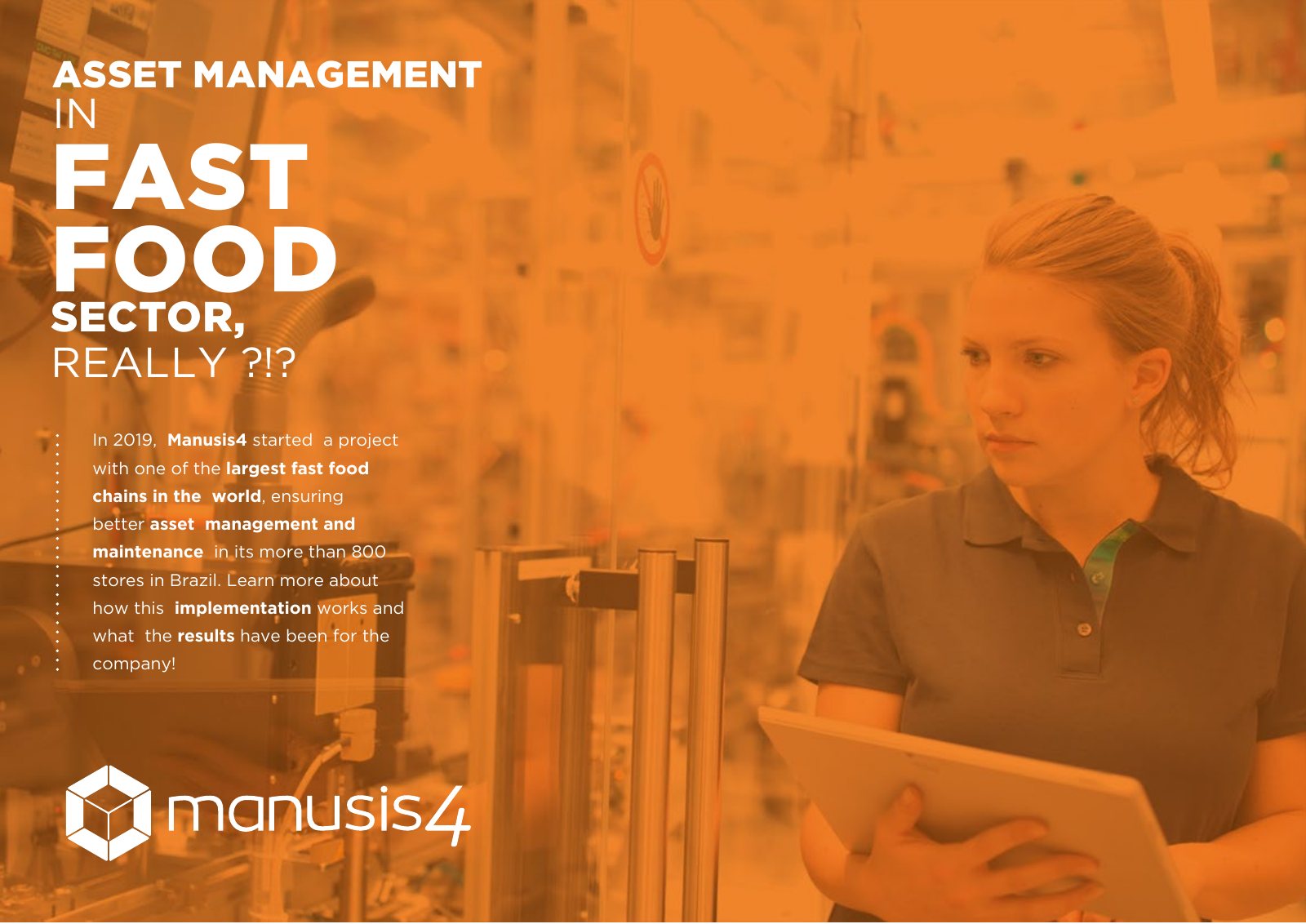
This case follows a maintenance-management rollout for a large fast-food chain in Brazil. It covers the operational demands of food service, the expansion from pilot stores to a nationwide network, and how shared KPIs and dashboards helped the client examine maintenance response and equipment availability.

  • Food-sector maintenance. The guide connects equipment upkeep with food safety, product quality and operating costs across restaurant locations.
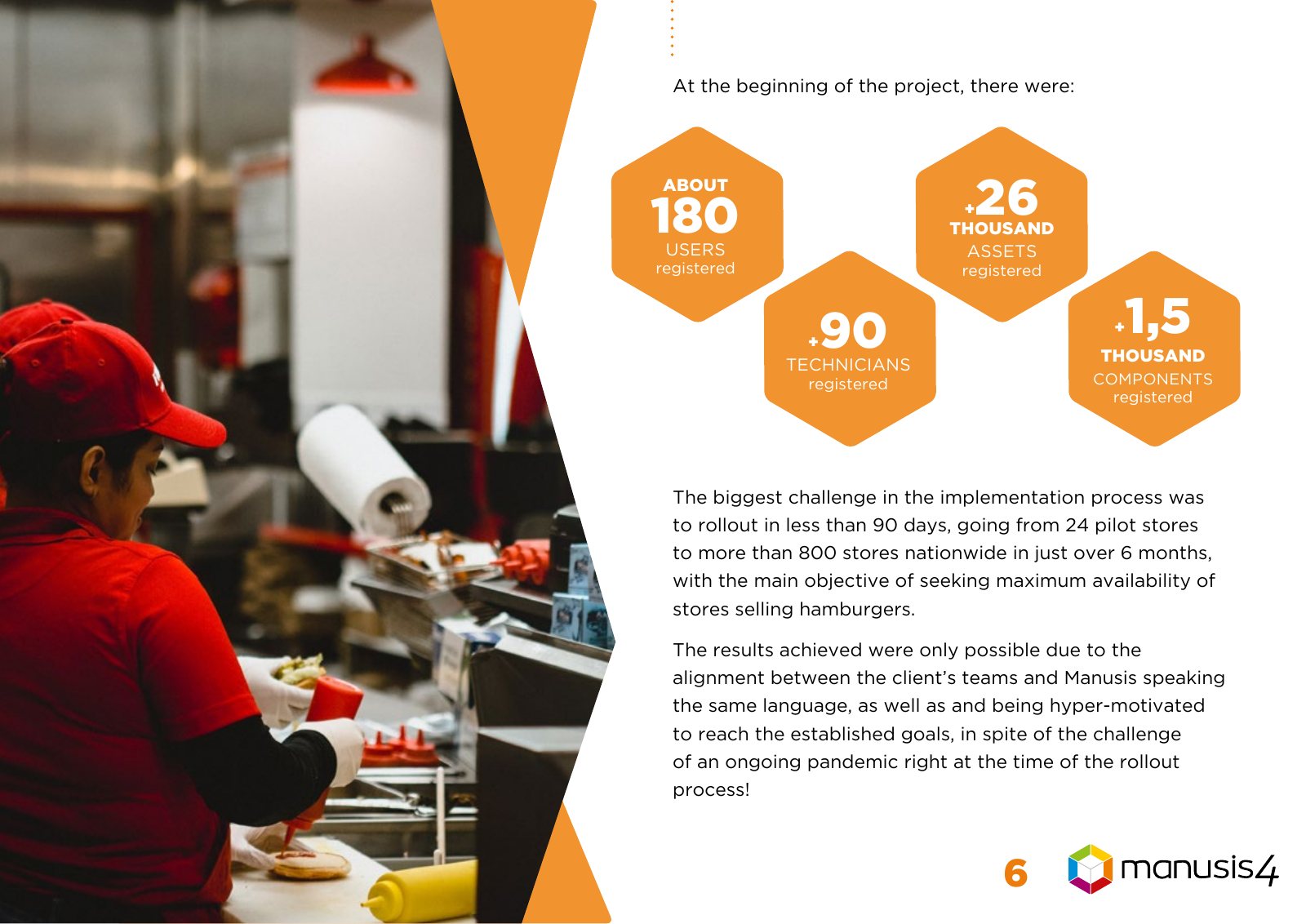
  • A large-scale rollout. The implementation moved from 24 pilot stores to more than 800 Brazilian locations in just over six months.
  • KPIs for action. The case discusses maintenance backlog, unavailability, response times and dashboards for comparing performance across stores and equipment.
E-book: Asset Management in the Fast Food Sector

14 pages · PDFIndustry application

Download the e-book

Fill out the form to download the material.

Overview

Maintenance processes across a restaurant network

The ebook presents a fast-food maintenance case in which Manusis4 was introduced to help manage assets and service processes across a large chain. It outlines preventive, corrective and predictive maintenance in food operations, describes the rollout from a 24-store pilot to over 800 locations, and reviews the use of KPIs to understand calls, failures and equipment availability. The account highlights coordination between the client and implementation teams.

14pages
EnglishLanguage
PDFFormat

Inside the e-book

Topics covered in this material

01

Why maintenance matters in food service

Equipment quality and upkeep are treated as part of producing safe food, maintaining product quality and controlling costs throughout restaurant operations.

  • Preventive checks
  • Parts adjustment and replacement
  • Predictive maintenance using indicators

02

Scaling the implementation

The client operated a broad restaurant network. The project began with 24 pilot stores and expanded nationwide, with the goal of increasing the availability of restaurants selling hamburgers.

  • 24 pilot locations
  • More than 800 stores in Brazil
  • Rollout in just over six months

03

Using indicators to improve

The system gave managers more detailed information about calls and failures, helping them compare stores, suppliers, equipment types and technicians and consider where processes could improve.

  • Corrective-maintenance backlog
  • Response and closure times
  • KPIs and benchmark dashboards

Key ideas

Concepts to take away

Food service

Equipment availability

Keeping restaurant equipment ready supports continuity of service and the maintenance standards required in food operations.

Performance

Maintenance KPI

A measure used to examine service response, closure, failures or other maintenance outcomes across locations.

A shared maintenance process and usable indicators make it easier to manage service quality across a distributed restaurant network.

Inside the e-book

A look inside

From pilot stores to national rollout. The implementation chapter describes expanding the project from 24 locations to more than 800 stores.
From pilot stores to national rolloutThe implementation chapter describes expanding the project from 24 locations to more than 800 stores.
Reading the maintenance indicators. The ebook shows how more detailed call and failure data can support comparisons and maintenance decisions.
Reading the maintenance indicatorsThe ebook shows how more detailed call and failure data can support comparisons and maintenance decisions.

Asset Management in the Fast Food Sector

A shared maintenance process and usable indicators make it easier to manage service quality across a distributed restaurant network.