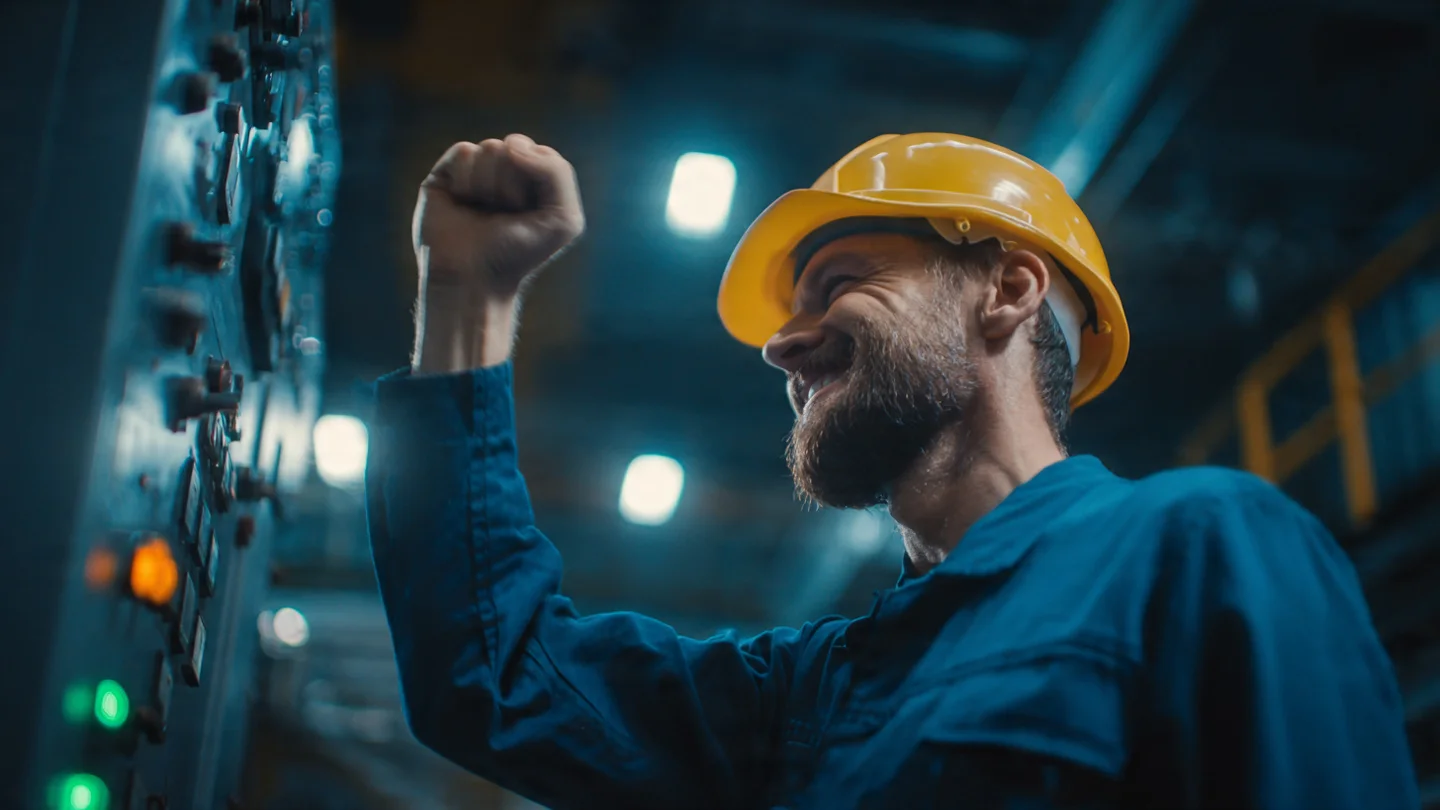
The technician closes the work order. The machine runs again. Five minutes later, another call arrives. At the end of the shift, it feels as though nothing has changed—even with ten interventions completed. This constant cycle creates a sense of invisible work. When the mind does not perceive small wins, motivation falls.
Industrial maintenance teams live this reality daily. One failure is solved and another appears. A plan is updated and more adjustments emerge. The effort is there, but it is diluted by routine. What is missing is not dedication. It is visibility of real progress.
Why the brain needs to feel progress in maintenance
Our brain releases dopamine—the neurotransmitter associated with motivation—when it perceives concrete advances. They do not need to be enormous. It could be a recurring failure that stopped happening, preventive work that avoided downtime, or a response time that improved. These are small wins. When recognized, they create a powerful sense of progress.
A common mistake in technical teams is celebrating only major results: annual cost reductions, large improvement projects, or successful audits. The problem is that these wins are rare. Without frequent recognition, the team starts feeling that everyday effort goes unnoticed.
McKinsey talent studies in 2024 show that employees who feel appreciated and part of something meaningful are less affected by burnout and work with greater commitment. When technicians see their contribution validated, they pay more attention, report anomalies earlier, and suggest improvements. Recognition turns minimum execution into genuine commitment.
In practical terms, recognizing small wins in maintenance means highlighting specific interventions with measurable impact: a pump that did not fail after a seal replacement, a motor gaining 200 hours of useful life after alignment, or a leak detected before it became a critical shutdown. These moments happen every day. They simply need to be seen and communicated.
How to create a weekly ritual of technical recognition
Setting aside a weekly moment to review results is the first step. It could be a short 15-minute meeting at the start or end of a shift. The question is simple: what improved this week? Sometimes the progress is small, but real. A work order closed in half the time. An asset completing 30 days without corrective intervention. An availability indicator rising by two percentage points.
Publicly recognizing contributors creates belonging. The technician who identified the centrifuge's failure pattern deserves to hear: “You saved the entire department.” This is not empty praise. It connects individual action with collective results.
Connecting the win to its wider impact shows how a small advance helps the entire operation. Well-performed preventive maintenance is not merely a completed task. It is a running production line, an order shipped on time, and a payroll kept intact. When technicians understand this, work gains meaning.
Here are practical actions to incorporate into the routine:
- Show an intervention's impact after a critical work order, sharing avoided costs or recovered production.
- Display operational indicators such as MTBF, MTTR, and failure rate on the factory floor.
- Record intervention histories to turn individual experience into collective knowledge.
- Connect every win to the month's KPI, showing how small improvements contribute to the overall target.
- Recognize achievements at the right time, since immediate validation has more impact than monthly feedback.
Industrial cases such as Goodyear's, documented by Plant Engineering, show that plants with formal recognition processes see more engaged teams and results sustained over time.
The power of visible data to turn effort into evidence
Nothing demotivates more than invisible effort. “My report disappeared into the pile,” the technician thinks. Measurable progress changes that. Real maintenance indicators are key. Improving OEE charts, falling mean repair time—evidence turns routine into a journey.
Plants with KPI visibility see productivity rise because accurate source data eliminates manual searches. Technicians no longer need to rely on memory or scattered spreadsheets. The history is there, accessible, demonstrating concrete progress. Gartner maintenance-market insights reinforce that maintenance software buyers prioritize features making performance metrics visible and actionable.
Asset management tools track interventions, indicator trends, and asset performance. Dashboards turn raw data into narratives of progress: visibly fewer failures, graphically declining MTTR, and highlighted assets with greater reliability.
This data shows something important: the team's effort is creating transformation. When the team sees this clearly, professional pride grows. Plants such as Stellantis already operate with this model, recording productivity gains of 15% after fully digitizing maintenance indicators.
Hidden cost: the price of ignored small wins
Beyond the obvious—turnover costing 1.5 times the salary per position—there is the invisible: lost tacit knowledge and stifled innovation. A team that sees no progress ignores early signals, increasing catastrophic failures.
Surprisingly, disengagement costs more than inadequate training. A disengaged technician does not immediately resign. They stay. But do the minimum. Do not report early anomalies. Do not suggest improvements.
ABB data cited by Indústria S/A shows that more than two-thirds of industrial companies experience unplanned downtime at least once a month, costing around R$712,500 per hour. An unplanned shutdown that could have been avoided through early reporting costs, on average, 10 times more than a planned intervention. This is the avoidable cost no HR spreadsheet calculates.
When small wins are ignored, the team stops trying. Innovations die at birth. Potential improvements are never tested. The real cost is not only turnover. It is what was never done because no one saw value in the effort.
Frequently asked questions about recognition in maintenance teams
How can small wins in everyday maintenance be identified?
Look for interventions that avoided downtime, reduced response times, or improved specific indicators such as MTBF and asset availability. Any measurable advance counts as progress.
How often should the team be recognized?
Weekly. Recognition spaced too far apart loses its connection to the action. Too frequently, it loses impact. A 7-day cycle maintains the rhythm without saturation.
Does maintenance data help with recognition?
Yes. Visible indicators turn subjective effort into concrete evidence, making real advances easier to identify and validate. Management systems centralize this information.
Conclusion: major transformations grow from consistent improvements
Major transformations rarely happen all at once. They grow from the sum of hundreds of small, consistent improvements. When the team learns to see these wins, work stops being merely effort and becomes development.
Asset management systems turn invisible work into evidence. They make it possible to see indicator trends, histories of avoided failures, improved response times, and assets with greater reliability. When the team sees this clearly, professional pride grows.
If your team still relies on spreadsheets to manage work orders and cannot see concrete progress in its work, the next step is simpler than it seems. Manusis4's Asset Management module eliminates precisely this bottleneck, without a complex migration.
Discover how to turn data into genuine engagement in maintenance.