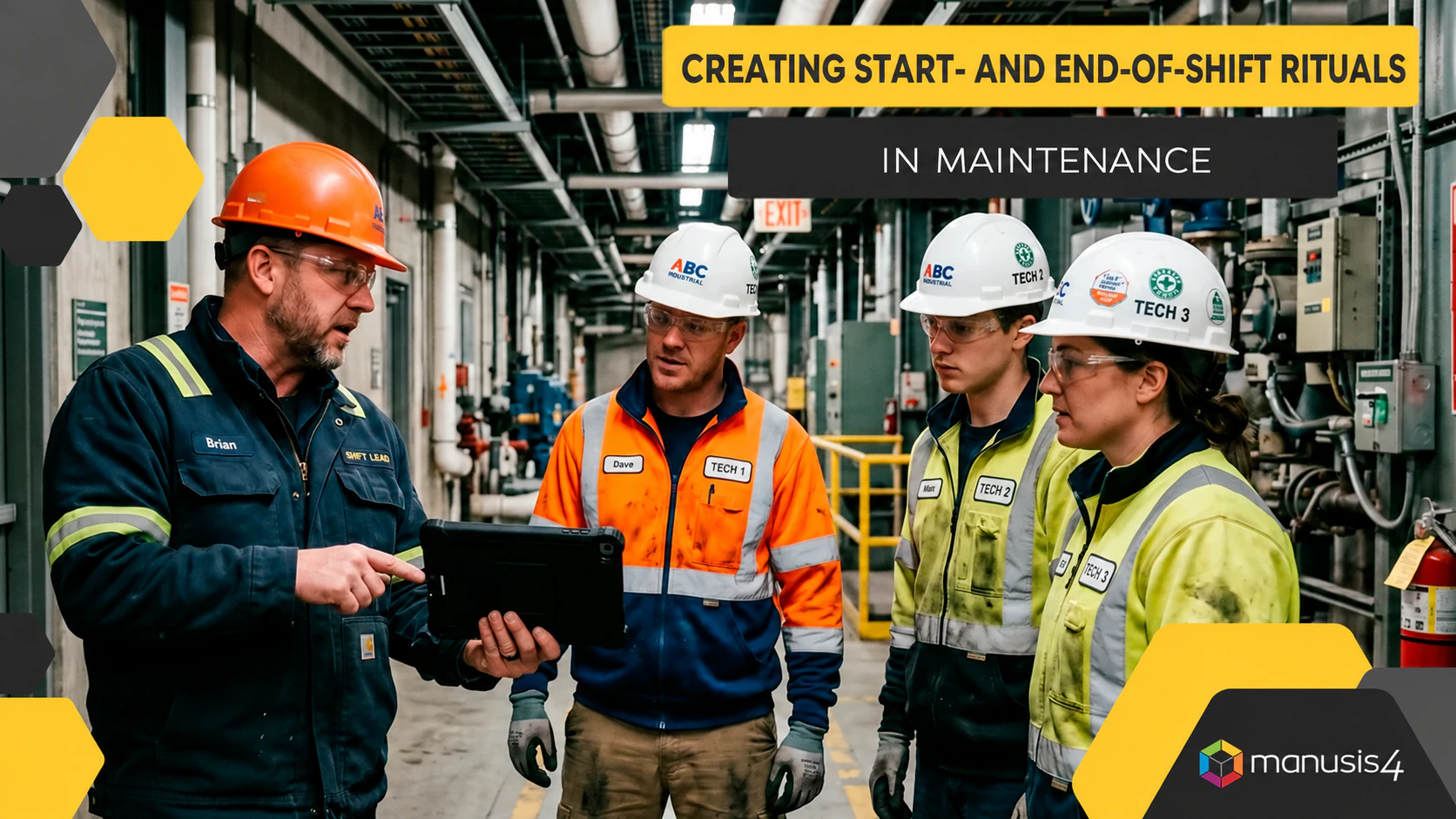
Have you ever noticed how a team enters the shift? Everyone arrives at their own time. One comes straight from traffic. Another just had an argument at home. Another slept three hours. And in a few minutes, all of them start opening work orders. All of them start making decisions — each with a different mental state.
At the end of the shift, it's the same thing in reverse. Technical teams don't cope. Technical teams wear out.
What Maintenance Forgot About Rituals
Almost every human culture has always created rituals to mark transitions. It is not mysticism — it is a very ancient brain mechanism. The brain needs external markers to reorganise its internal state.
When these markers don't exist, the brain enters diffuse mode. The result is a very common feeling in maintenance professionals: "I'm tired, but I don't know from what." / "I worked all day, but I don't feel like I delivered anything."
What NLP Teaches About State and Performance
Neuro-Linguistic Programming works with a simple and powerful concept: Emotional state defines performance. Performance does not change emotional state.
If you start the shift poorly, you will deliver poorly — no matter how competent you are. The path is to create a conscious transition — a portal that tells the brain: "Now you are here." That is what a ritual does. It is not decoration. It is mental engineering.
Where Manusis4 Enters as an Ally
Manusis4 provides an objective anchor point for the beginning and end of the day: the leader opens the system and sees what is open, what is priority and what can wait. The team enters the shift with the maintenance queue clear in real time. At the end, each person records what they delivered — without mental load for anyone.
How to Build Simple — and Effective — Rituals
🟢 Start Ritual (90 seconds)
- Open Manusis4 and review the day's queue
- Breathe deeply 3 times in silence
- Visualise: "I am here now — and I will do my best"
- Set one intention for the shift (just one)
- Greet those who arrived — making eye contact
🔵 End Ritual (90 seconds)
- Update in Manusis4 what was delivered
- Look at what remains open and breathe — it's not your problem now
- Visualise: "I did what was possible with what I had"
- Say goodbye to those leaving
- Exit the physical environment marking: "now my other life begins"
"I don't enter work. I begin work. And I don't leave work. I close work." — Weekly Reprogramming