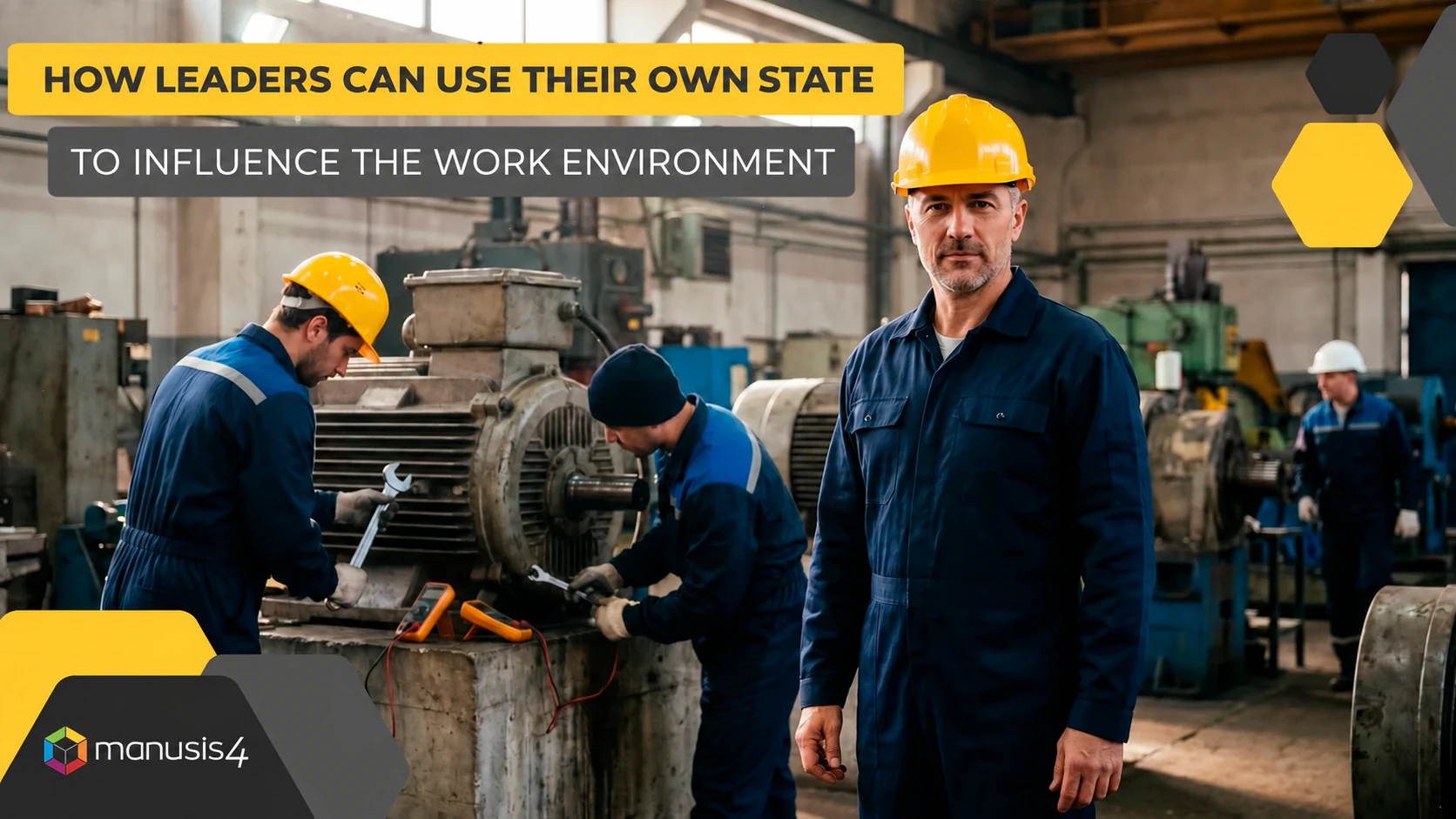
The motor stops. The panel beeps. The production line immediately goes on hold. The coordinator arrives shouting for deadlines and pointing at the clock. Instead of focusing on the technical solution, the team focuses on protecting itself. Response times soar and the asset remains out of service.
Managing maintenance teams takes more than rigorous spreadsheets and indicators pinned to a noticeboard. It happens directly on the factory floor, under constant pressure, where human behavior sets the true pace of everyday operations.
But what happens to plant reliability and availability when leadership's emotional gauge is completely out of adjustment before the shift has even begun?
The physiology of error under operational pressure
Pressure to keep machines running is a reality for every asset manager. But when that natural urgency becomes uncontrolled irritation, the immediate result is a drastic reduction in the logical reasoning capacity of the technicians doing the hands-on work.
The manager's internal state affects the entire workshop. If the leader arrives tense, the workplace freezes. Diagnosing a simple electrical failure becomes a maze because the technician fears making a mistake and being reprimanded publicly. If the leader arrives agitated, the team descends into chaos. That is exactly when tools are left inside gears, energy isolation is only half completed, and routines are abandoned.
Field studies confirm that fatigue and external pressure imposed by management directly catalyze unintentional human errors during critical interventions. The consequences of an aggressive attitude reverberate through an immediate loss of productivity.
The workshop's behavior reflects the self-regulation of the person guiding it. Consider these real situations:
- A tense leader: the technician's focus shifts from the root of the problem to personal defense.
- An agitated leader: workplace safety procedures are ignored in the name of artificial urgency.
- An irritated leader: the team falls silent, concealing early anomalies that will erupt the following week.
- A present leader: the workplace can breathe, the team applies the right method, and a predictable failure is prevented.
The behavioral consequences in demanding routines are undeniable. How can this purely human bias be corrected technically and systematically?
How does the manager influence the environment when managing maintenance teams?
Neuro-Linguistic Programming (NLP) provides a technical lens for analyzing a bottleneck that appears merely managerial. Its basic principle is unchanging: the mind's internal state determines the quality of actions and interventions performed throughout working hours.
Before asking for completed checklists or physical-availability targets, the professional leads collective emotional states. The most critical aspect of this operational dynamic is that leadership behavior has no off switch. You constantly transmit your state of alertness to those around you.
In practical terms, the manager's internal state determines the quality of interactions on the factory floor. Team behavior directly reflects the emotional regulation of the person coordinating it, influencing the work's pace and the accuracy of each technical failure diagnosis.
The most common mistake in large industrial companies is focusing exclusively on visual-management boards, lubrication processes, OEE targets, and tight delivery deadlines. Supervisors neglect tactical leadership's primary asset: their own mental and situational control. They try to correct the team's slowness when the environment is merely reacting to excessive stress.
Analytical capacity plummets when management loses control of its own reaction to the day's first unexpected event. What is the direct financial consequence of this communication gap?
The hidden cost of negative emotional contagion
The financial impact of behavioral inefficiency is not printed on the storeroom spare part's invoice. It drains the reliability department's annual budget much more stealthily and continuously.
The greatest capital drain comes from the everyday omission of information. When mechanics constantly fear an explosive supervisory reaction, inspection-round reports lose all accuracy. An inspector notices an abnormal temperature rise but marks the route as normal simply to avoid immediate friction.
This defensive attitude turns an inexpensive, identifiable anomaly into a catastrophic breakdown thirty days later. The price of a preventively replaced bearing becomes the extreme cost of a destroyed shaft, requiring long hours of unplanned downtime on the factory's main line.
A lack of self-regulation produces databases filled with falsehoods. Without concrete information at the primary source, no corporate strategy survives the test of continuous use. How can this dangerous logic be reversed before the technician touches a tool?
Resetting leadership before the technical intervention
Changing behavior in high-risk environments requires a structured method, not just passing motivation in Monday speeches. Coordinators need practical mechanisms to stabilize their minds before taking control of a critical stopped line.
The first step is establishing an inviolable transition ritual. Before receiving overnight outstanding work or asking for the status of an urgent repair, managers must not act on pure reactive impulse. They need a scheduled pause to calibrate their own response to operators.
NLP-related practices help condition constructive automatic reactions, allowing technical rationality to take the reins back from momentary frustration. This anchoring ensures everyone is guided by concrete facts.
To introduce this correction into daily work:
- A strategic pause: set aside two minutes of mental silence before entering the factory to define the day's professional intention.
- Physical anchors: associate a routine personal gesture with immediately activating a focus on safe resolution.
- A tactical reaction filter: ask yourself: “Is my current agitation helping the team diagnose the breakdown or simply destroying progress on the tasks?”
- Active listening at handover: ensure reports are handed over without direct accusations, focusing strictly on work progress.
The individual development of a single leader enhances the facility's collective response capacity. How does digital infrastructure help sustain this high-performance mindset?
Technology as the foundation for accurate source data
A professional overwhelmed by urgency often uses corporate systems merely as instruments of punishment and retrospective auditing. By contrast, a self-regulated, focused manager uses software as the main lever for removing the fog and chronic uncertainty of the working day.
When coordinators have full visibility of actual history and backlog, the department's anxiety falls sharply. Monthly planning stops being a guess based on outdated spreadsheets and becomes a decision based on real data. This is precisely where Manusis4's Work Orders module consolidates the tactical structure needed to remove mental overload from those responsible for assets.
With traceable, accessible information, supervisors can anticipate bottlenecks in the allocation of in-house or contracted labor. The platform clarifies what needs to be tackled first thing in the morning, protecting the team from daily rework. World-class industrial plants such as Stellantis operate with this level of control, replacing risky improvisation with continuous workflows.
Digital control over maintenance drastically reduces decision fatigue. Manusis4 handles the difficult statistical processing, allowing humans to do human work.
Frequently asked questions about operational influence
Why does the supervisor's emotional regulation affect response times?
Losing control spreads fear and tactical confusion among field professionals. Without clarity under intense pressure, the team loses focus on manuals and design standards, considerably extending the time spent isolating the failure and assembling subassemblies.
How can self-regulation techniques be applied on the factory floor?
The focus is on creating brief mental routines that interrupt harmful instinctive reactions. This enables managers to monitor whether their body language is pulling people toward the solution or moving everyone away from the goal of keeping the asset available.
The practical limits of the human role
Before trying to speed up bolt-tightening across your operational team, assess and recalibrate your own leadership behavior on the industrial floor. True technical authority has never been limited to folding your arms and demanding completed reports at the end of Friday. It is expressed as a powerful influence in every exchange beside a damaged compressor. The avoidable cost of exhaustion silently erodes component life and profit margins.
If your team still depends on extreme pressure, mutual accusations, and exhausting shifts to complete the week's preventive schedule, the next step is simpler than it seems.